
Ask a room of players how many use subtitles. It will be most of them, and almost none will describe themselves as hard of hearing.
That is the whole pattern in one example. Features built as accommodations keep turning out to be improvements everybody wants, and the industry keeps being surprised by it.
The curb-cut effect, in games
The idea has a name outside games. Dropped kerbs were mandated for wheelchair users; they are now used by anyone with a pushchair, a suitcase, or a delivery trolley. The accommodation became infrastructure.
Games have run the same play repeatedly:
- Subtitles were for deaf and hard-of-hearing players. They are now standard for anyone in a shared room, playing quietly, or dealing with a modern audio mix that buries dialogue under score.
- Remappable controls were for players with limited mobility. They are now expected by anyone with a preference, a fight stick, or a left-handed grip.
- Colourblind modes improved contrast generally, which is why players with typical vision often prefer them in competitive games.
- Toggle-instead-of-hold was for players who cannot sustain pressure. It is simply more comfortable for everyone over a long session.
In each case the feature was justified as a minority accommodation and adopted as a majority default. That is not a coincidence — it is what happens when you are forced to question an assumption nobody had examined.
The Last of Us Part II as a turning point
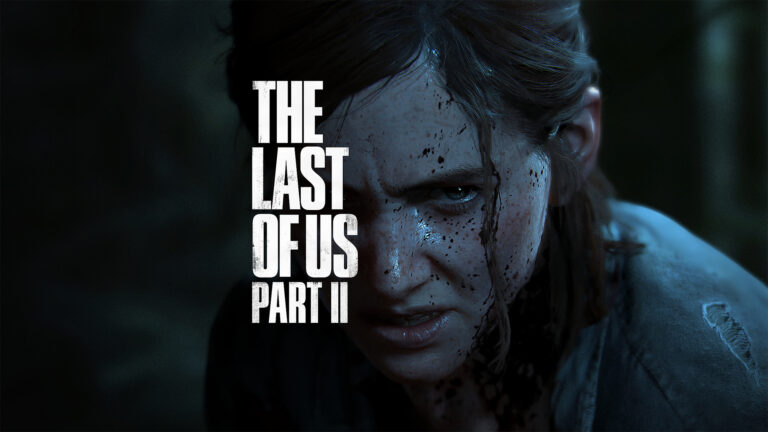
The reason that game gets cited is scale. Over sixty accessibility options, including a set that made it completable by blind players — audio cues for navigation, traversal assistance, combat readouts.
What mattered was not the option count but the proof of concept: a big-budget, heavily cinematic, mechanically demanding game could be made playable without vision at all, and doing so cost the design nothing. Nobody's experience got worse. The argument that accessibility means compromise lost its most convenient example.
It also demonstrated the practical lesson studios keep relearning — this only works if it starts early. Retrofitting accessibility into a finished game is expensive and produces menus full of half-working toggles. Designing for it from the start is mostly just... designing carefully.
Where the argument gets genuinely difficult
The honest part. Not every accessibility question has a free answer, and pretending otherwise makes the easy wins look suspect too.
Difficulty is the obvious one. When a game's meaning depends on struggle — the Souls formula being the standing example — an easy mode is not a neutral addition; it changes what the game is about for anyone who takes it. The counter-argument is equally real: people with disabilities are excluded from a whole genre by execution requirements that are incidental to what makes it good.
The most useful framing I have seen separates challenge from friction. A boss that demands pattern recognition is challenge, and it is the point. A boss that additionally requires a fifteen-second unskippable walk after every death is friction, and removing it costs the design nothing. A great deal of what gets defended as difficulty is friction wearing difficulty's clothes.
Competitive multiplayer is harder still, because some assistance is indistinguishable from advantage and there is no clean answer. It is fair to say the industry has not solved this one rather than pretend it has.
The cheap wins that keep being skipped
A striking amount of what players ask for is trivial to implement and still routinely absent:
- Subtitle size and background opacity — text over a bright scene is unreadable without a backing plate
- Speaker names in subtitles, so a conversation is followable
- Separate volume sliders for dialogue, effects and music
- Toggle options for every hold input
- Removing or reducing camera shake and motion blur
- Not gating anything behind a quick-time event with no alternative
None of these are ambitious. All of them are the difference between a game being playable and not for some group of people, and each also makes it more pleasant for everyone else.
The reframe
The useful shift is to stop treating accessibility as a feature category with its own budget line and start treating it as evidence about the design. An option that a wide range of people immediately switch on was never an accommodation — it was a default that had been set wrong.
Subtitles being on by default in so many households is not players adapting to a disability. It is a design that was worse than it needed to be, corrected by people who were told they were asking for special treatment.